Blog Posts
–
VTOL vs eVTOL | Doroni Aerospace
VTOL vs eVTOL
Every eVTOL is a VTOL, but not every VTOL is an eVTOL. The difference is electric propulsion, which changes how an aircraft is designed, maintained and used.
Traditional VTOL aircraft, such as helicopters, rely on combustion engines and established rotor systems. eVTOLs use electric motors, often distributed across the aircraft to provide lift and thrust. This creates new opportunities for simpler mechanical systems, propulsion redundancy and quieter operation, while battery capacity remains a key limitation.
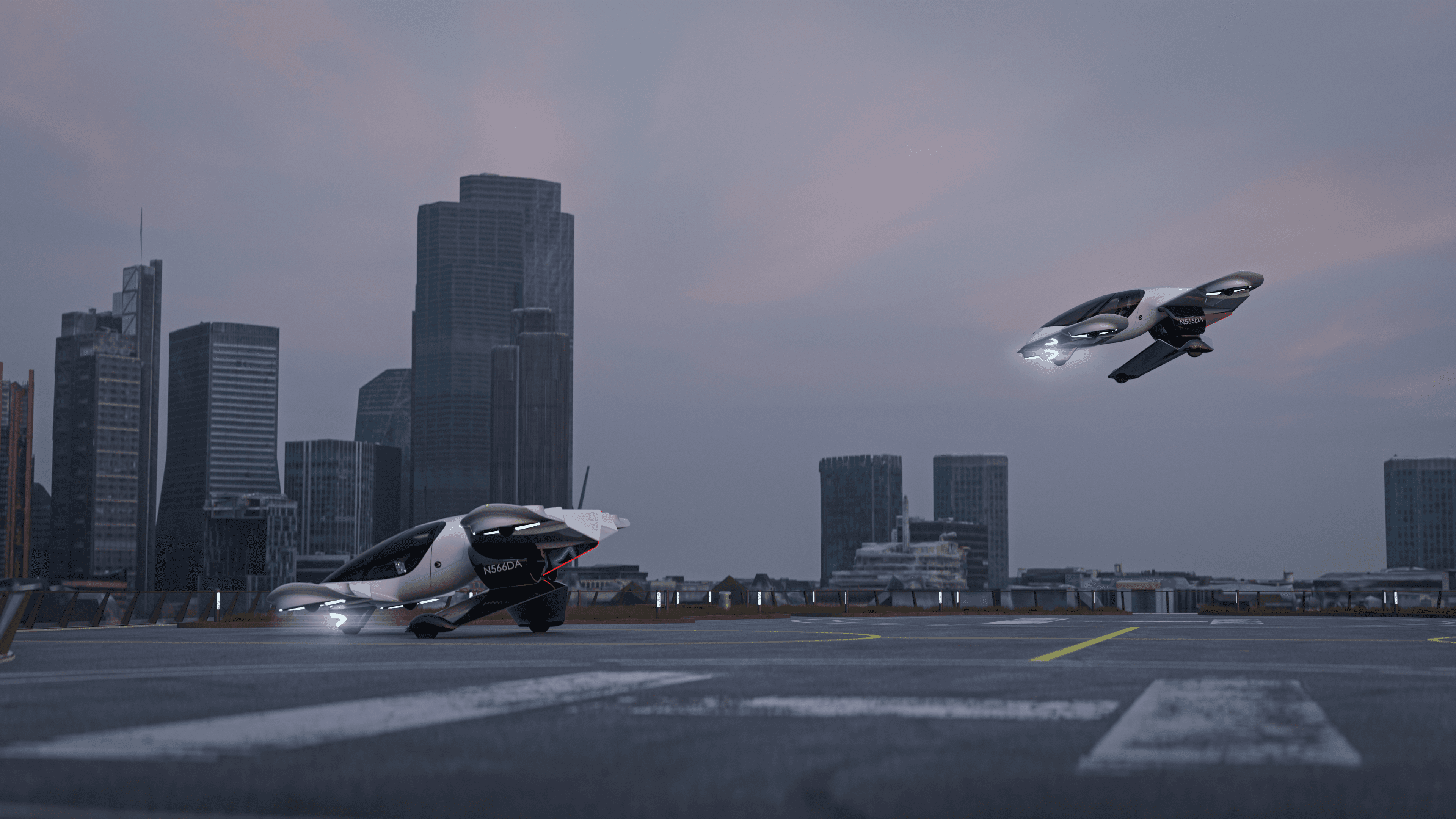
At Doroni, we are developing the H1-X as a flying car to make vertical flight more accessible to individual owners. Here is how VTOL and eVTOL aircraft compare, and where each makes the most sense.
What Is the Difference Between VTOL and eVTOL?
VTOL describes an aircraft's ability to take off and land vertically. eVTOL describes an aircraft that performs this function using electric propulsion.
The distinction matters because VTOL includes several types of aircraft, from helicopters to military jets and tiltrotors. eVTOLs are a newer category focused on electric power, with many designs using multiple motors and wings for forward flight.
Traditional VTOL aircraft have established roles in aviation. eVTOLs offer another approach, particularly for shorter journeys and personal transportation.
Aircraft type | How it works | Main advantage | Main limitation |
Helicopter | A combustion engine drives a main rotor | Established technology, range and payload capability | Mechanical complexity and maintenance |
Tiltrotor | Rotors tilt between vertical and forward flight | Combines vertical takeoff with efficient forward flight | Complex mechanical systems |
Vectored- thrust jet | Engine thrust is directed downwards for vertical flight | High performance in specialised military roles | High fuel consumption and noise |
eVTOL | Electric motors provide vertical lift and, depending on design, forward thrust | Potential for simpler maintenance and distributed propulsion | Battery energy limits range and payload |
What Changes When a VTOL Aircraft Goes Electric?
Electric propulsion changes more than the aircraft's power source. It affects energy storage, maintenance, noise and how designers distribute propulsion across the airframe.
Energy Efficiency and Range
Battery energy density remains one of the main limitations of eVTOL aircraft. Aviation fuel stores substantially more energy per kilogram than today's lithium-ion batteries, although electric motors convert stored energy into motion more efficiently than combustion engines.
To make the most of available energy, many eVTOL designs use wings for forward flight. Hovering requires considerable power, while wings generate lift as the aircraft moves forward.
The Doroni H1-X follows this approach, combining vertical ducted fans for takeoff and landing with separate propulsion for forward flight. It is designed for a range of up to 100 miles and a cruise speed of around 95 mph, making it suited to shorter personal journeys rather than every mission a conventional helicopter can perform.
Maintenance and Running Costs
Electric motors have fewer moving parts than conventional combustion engines, which can simplify maintenance and reduce routine servicing requirements.
The H1-X is expected to avoid engine-related tasks such as oil changes, spark plug replacement and fuel filter servicing. However, batteries degrade over time and may need replacing, so their lifetime cost must be considered.
Lower operating costs are a potential advantage of eVTOL technology, but actual savings will depend on aircraft performance, maintenance schedules, battery life and real-world operating data.
Propulsion Redundancy
Many eVTOL designs distribute propulsion across multiple electric motors rather than relying on one engine and a conventional drivetrain.
The H1-X is being developed with 10 independent electric motors. Doroni's design objective is to maintain controlled flight and enable a safe landing if up to two motors fail. This capability remains subject to testing and certification.
Distributed propulsion creates opportunities for additional redundancy, although the aircraft's overall safety depends on the complete design, including its power supply, control systems and emergency procedures.
Noise
Electric motors and enclosed ducted fans offer the potential to reduce noise compared with some conventional aircraft configurations.
The H1-X uses enclosed ducted fans, which Doroni expects to help reduce its noise signature. Actual noise levels will need to be established through testing rather than inferred from the design alone.
How VTOLs and eVTOLs are Regulated
Certification depends on the aircraft's design, intended use and regulatory category.
Traditional helicopters follow established rotorcraft certification requirements. Many commercial eVTOL air taxis fall under the FAA's powered-lift framework, finalised in October 2024, which addresses aircraft that combine characteristics of vertical flight and conventional aeroplane flight.
Personal eVTOLs may follow a different certification route. The FAA's MOSAIC framework expands the Light Sport Aircraft category and the Sport Pilot pathway. Doroni is developing the H1-X within this framework, with TLG Aerospace supporting structural, aerodynamic and certification engineering.
The H1-X currently holds an FAA Special Airworthiness Certificate for testing. This permits authorised testing activity but is not production certification or approval for customer deliveries.
The applicable pilot requirements will depend on the final aircraft certification and relevant FAA rules.
Where Is the eVTOL Industry Heading?
VTOL aircraft have a long operating history, while electric vertical flight is still developing towards broader commercial use.
The next milestones for eVTOL manufacturers include completing flight testing, achieving the required certification, establishing production and supporting aircraft owners. Progress will depend on engineering results, regulatory approval and the ability to manufacture aircraft reliably.
Doroni is targeting the start of H1-X customer deliveries in 2028, with a certification flight campaign targeted for completion by late 2027. These are forward-looking targets, not guarantees, and remain subject to testing, certification and production readiness.
For a broader look at the timeline, read when flying cars will be available.
If you are interested in becoming part of the future of the eVTOL industry, you can learn more about investing in flying cars on our website.
For all officially disclosed information regarding our business development and strategic direction, please refer to our Form 1-A filed with the SEC.